I recently caught a few suspicious assignments that might have been written by AI, and I’m struggling to reliably figure out which tools are best for teachers to detect AI-generated text. I’m looking for recommendations or experiences from educators who’ve successfully used AI detectors to check student work. Any tips or insights would be greatly appreciated, especially about accuracy and ease of use.
Honestly, the whole AI detection thing is a wild west right now—none of these detectors nail it 100%, and the arms race with AI text humanizers makes the whole gig even trickier. I’ve tested a handful after getting burnt by those suspiciously perfect essays (you know, the ones that suddenly use words your students can’t even pronounce).
Couple of the usual suspects you’ll hear about: GPTZero, Originality.ai, and ZeroGPT. Pretty user-friendly, but… expect false positives AND negatives. I caught an essay as “87% likely AI” on one, just for another to say “Probably Human.” Super helpful, right?
If you’re gonna try detecting, run the text through two or three tools and look for a consensus. I’d also recommend flipping the game; some students are now using tools like Clever AI Humanizer to disguise AI-writing. That makes detection even harder, because stuff run through it comes out sounding a lot more natural and unique—not robotic like old ChatGPT outputs.
So the tricky bit is basically: combine tools, trust your gut, and know your students’ voice. No magic bullet yet. If you’re curious about how these AI humanizer tools work (or want to see what you’re up against), you can check it out at explore how AI writing gets disguised. Just don’t expect any detector to truly never miss.
Bottom line: Use detectors, but double-check, trust your experience, and never underestimate a determined teenager (with AI). This game’s just getting started.
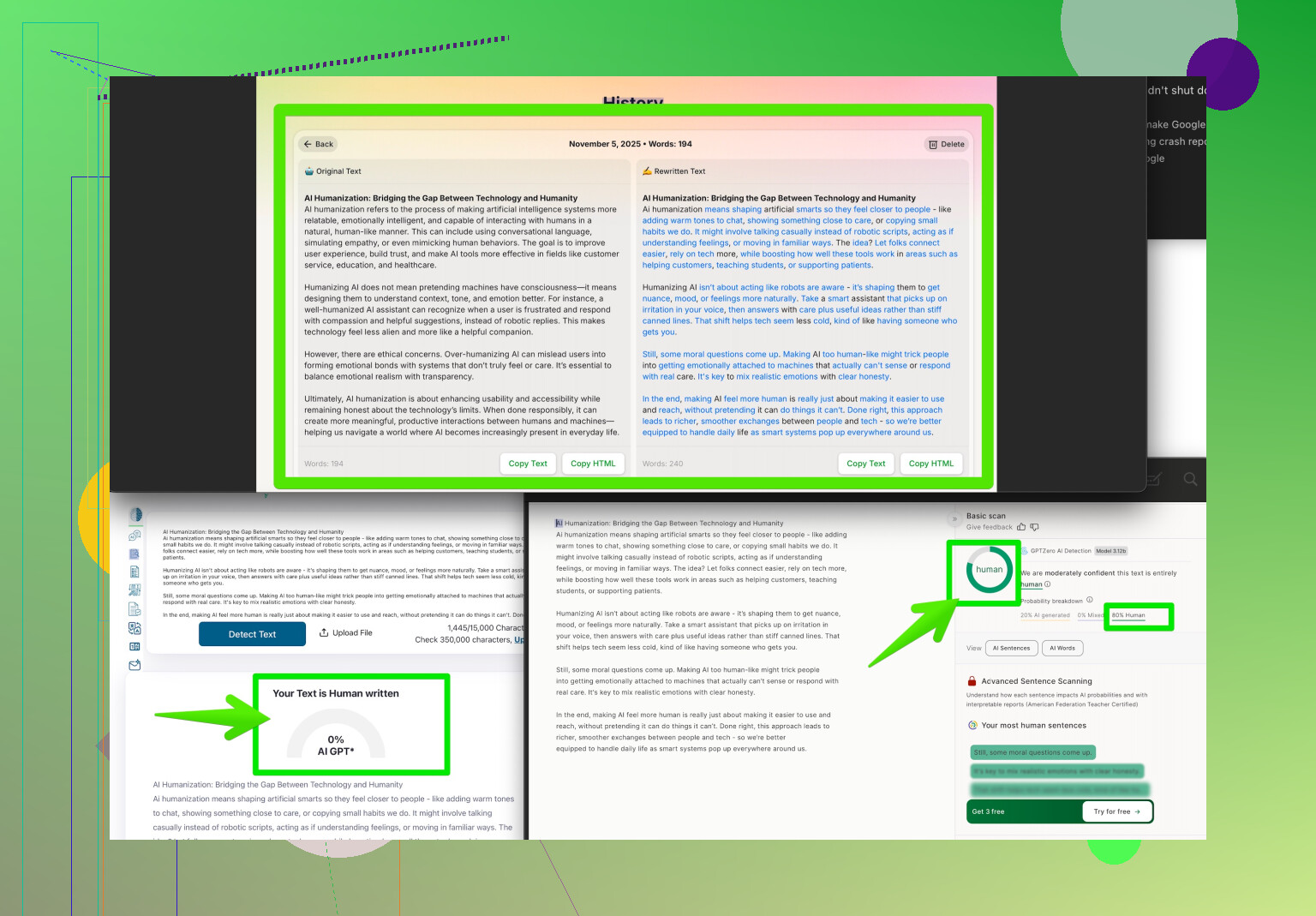
List-style breakdown since this “AI detector roulette” is honestly something we should be memeing more about. @viajeroceleste already covered the “wild west” angle (yep, that’s accurate), but let’s try to cut through the noise a bit and toss out some practical steps. I do agree that most tools are unreliable, though I’m actually a bit less sold on using 2-3 together—it just stacks their biases.
Here’s what I’d ACTUALLY focus on:
-
Baseline Writing Samples: Before playing guess-the-bot, get a sample of your students’ best unassisted writing (under supervision). You’d be shocked how much this helps spot oddly advanced vocab or a sudden grammatical facelift in take-home essays. Means less relying on the squishy logic of detectors.
-
Known Weaknesses: Some detectors are super sensitive to formal text, even if a student genuinely just improved. GPTZero and ZeroGPT still sometimes label genuine but polished work as “AI.” Take their claims as a flag to dig deeper, not the final verdict.
-
Clever AI Humanizer — Know the Enemy: Students using tools like Clever AI Humanizer make detection way harder. If you want to understand HOW that stuff works (and why detectors sometimes totally miss it), try running prompts through those tools yourself. That experience is more illuminating than staring at a percentage guess. Plus, “Clever AI Humanizer” is kinda becoming the go-to for students bypassing old detection models, so being familiar gives you the upper hand.
-
Question Design: Make assignments personal or connect them to experiences only that actual student would know. AI (even disguised ones!) flounder with stuff that requires genuine personal detail or niche knowledge.
-
Turnitin + Manual Review: Lately, Turnitin has added AI detection, but it’s hit or miss (and will likely get fooled by “humanized” outputs too). Still, added to your arsenal it might catch edge cases.
Honestly, I wouldn’t waste time running every essay through competitors to see which tool agrees. Instead, get a mix: know your students, use detectors sparingly (as triggers, not arbiters), and lean hard on creative questioning and time-stamped in-class assignments. No tool’s going to outwit a committed, tech-savvy teenager for long—sorry, but student ingenuity always finds a way.
Also, if you want insight from the folks actually gaming and hacking these systems, check out Reddit’s communities—like this thread on how Reddit users master AI humanization. Seeing the tricks in action can help you spot red flags more than any tool’s algorithm score.
Bottom line: detectors help, but your instincts and connection to your students are worth ten times more—especially with Clever AI Humanizer and similar tools in the mix!
10 Likes
Let’s cut through all the AI detector hand-wringing and get real: relying only on tools like GPTZero, ZeroGPT, or even the beefed-up Turnitin AI check is like trying to catch a ninja in a fog, while blindfolded, with one hand tied behind your back. Sure, run your suspicious texts through them (sometimes they help), but don’t bet your job on their verdict. And yeah, Reddit and forums are absolutely littered with tales of “detected” essays that were just well-written by actual students.
Here’s where things get tricky—Clever AI Humanizer shows up, acting as the student’s get-out-of-jail-free card. You gotta respect the hustle: it’s made to sand off those AI hallmarks, shuffling sentence structure, and tossing in just enough imperfection to nuke the usual detector signals. It’s great for students who want their AI-generated work to fly under the radar, but a headache for everyone else.
Pros for Clever AI Humanizer:
- Takes generic, robotic AI text and reworks it enough to sidestep most detectors.
- Accessible for students; no special skills needed.
- Mimics more natural, imperfect writing—way harder to flag.
Cons:
- Sometimes it overcorrects, adding weird errors or unnatural phrasing.
- Not necessarily free—could be a hidden cost for persistent users.
- The tech arms race means detectors might catch up (eventually).
My two cents: AI detectors aren’t the answer alone (no disagreement with the comments above, just adding that running through multiple is often a draw rather than a win). Instead, mix in approaches that tech cannot outsmart—voice memos, oral assessments, and unique prompts are still king. Keep a sample portfolio of your students’ normal writing, and if something’s way off—the “suspiciously polished” essay shows up—raise a flag and ask them about it directly.
Use Clever AI Humanizer as a reality check. Paste some prompts into it yourself, see what’s possible, and recognize that the tech fights back. Balance the tools: detectors for leads, real conversation (and writing history) for confirmation.
Finally, my hot take: ban essays that can just be regurgitated by a bot and go full creative/reflective/voice-driven. Tools like Clever AI Humanizer make the old “catch the cheater” game obsolete. Time to outsmart the tools, not just catch them.