I recently tried TwainGPT Humanizer to improve the tone and clarity of some AI-generated content, but I’m not sure if it’s actually making my writing sound more natural or just different. I’d really appreciate feedback from anyone who’s used it—how accurate, reliable, and “human” did it feel, and are there better alternatives for content creators and bloggers? I’m trying to decide whether to keep using it or switch tools, especially for SEO-friendly, human-sounding articles.
TwainGPT Humanizer Review
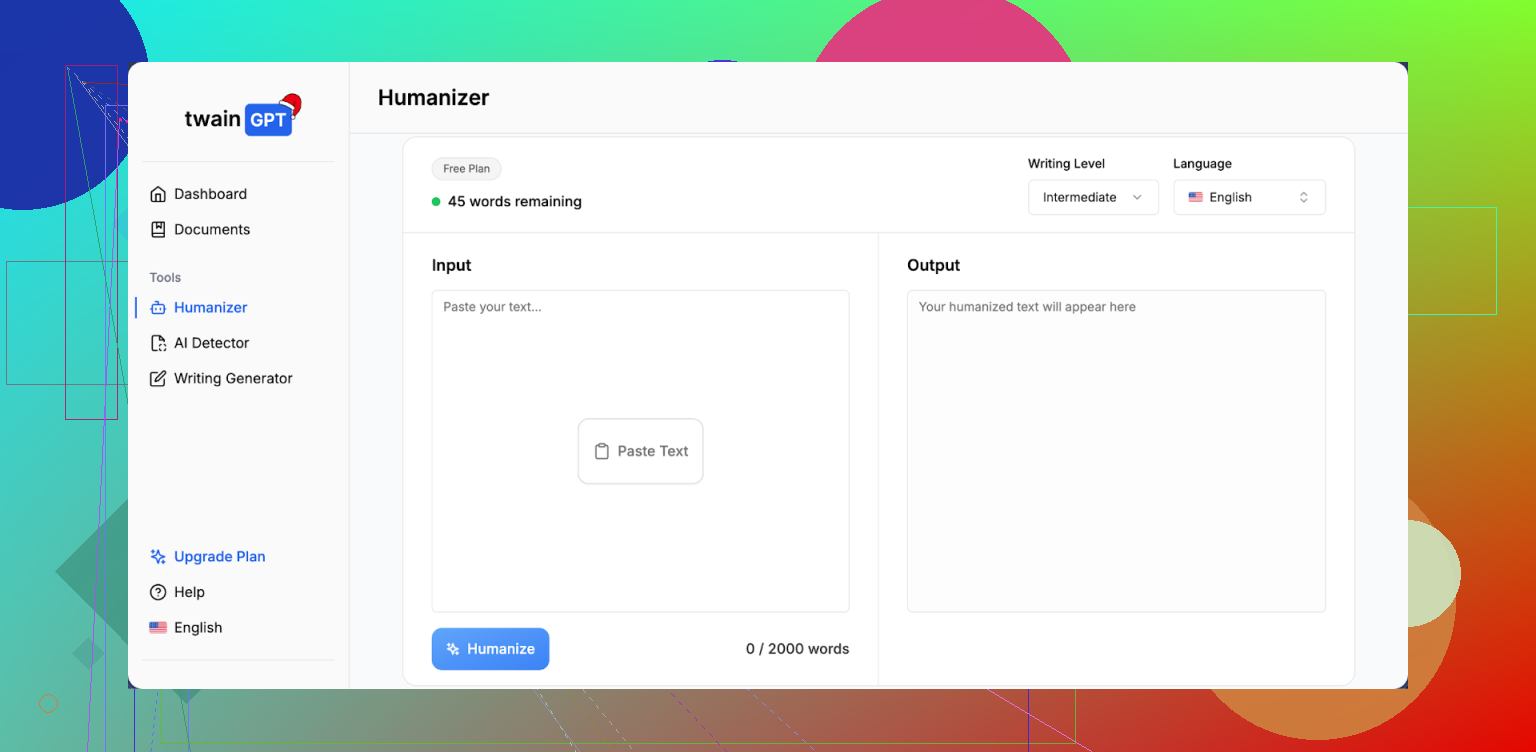
I spent an afternoon messing around with TwainGPT after seeing it mentioned as an “AI humanizer” that supposedly helps dodge detectors. Short version, it behaved like a student who only studied from one teacher’s answer key and then walked into a different teacher’s exam.
I ran three different samples through it. Then I checked everything against a few detectors.
Here is what happened.
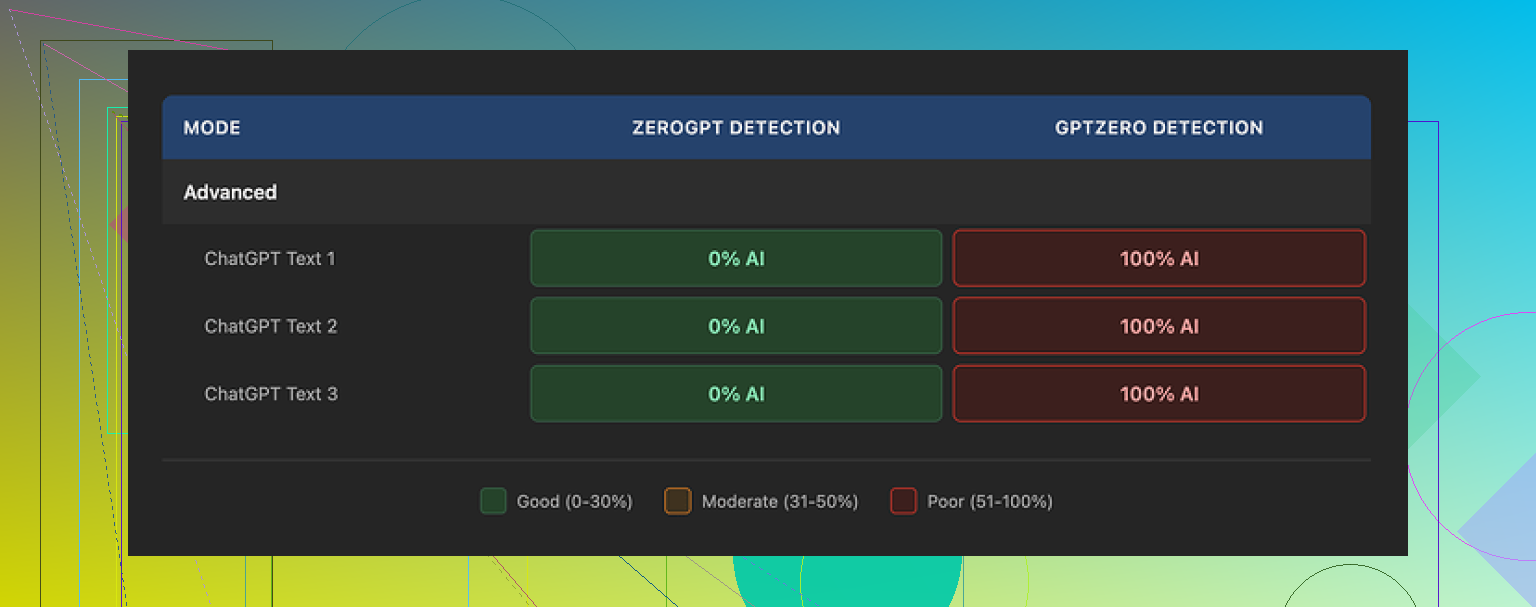
ZeroGPT: all three outputs showed 0% AI. Clean. If your whole life depends on ZeroGPT alone, TwainGPT looks amazing.
GPTZero: same three outputs, all flagged as 100% AI. No nuance, full hit every time.
So you end up with this weird situation where the tool passes one gate and fails the other completely. If you do not know in advance which detector your text will face, you are rolling the dice.
On the writing side, I was not impressed.
What I saw across samples:
• Long, normal sentences turned into choppy fragments
• Paragraphs started to feel like bullet points without bullets
• Some phrases felt like they were pulled from a bad template
• A few sentences were almost unreadable without re-editing by hand
The output reminded me of those old corporate slide decks where every line is short, flat, and awkward. It did reduce some “AI-ish” patterns, but it did it by dumbing things down and breaking the flow.
If I had to put a number on writing quality, I would give it around 6/10. It is usable if you are willing to manually fix it. I would not paste it straight into anything important.
Pricing and terms
Here is how the pricing looked when I checked:
• Entry plan: around $8 per month on an annual plan, with roughly 8,000 words
• Top plan: about $40 per month for unlimited words
What bothered me more than the price was the refund policy. They say no refunds at all, even if you paid and did not use it. That is harsh for a tool with hit-or-miss detection performance.
They do offer a small free allowance of up to 250 words. My advice, squeeze every bit of value from that free limit before entering card details. Try different styles, longer paragraphs, and then run those outputs through several detectors, not only one.
Comparison with Clever AI Humanizer
To keep things fair, I ran the same kind of tests through Clever AI Humanizer and checked with the same detectors.
In my runs, Clever handled detectors better overall and preserved writing style in a more natural way. It did not shred the sentences into weird fragments as much, and it did not feel like I was reading a slide deck.
The kicker, Clever AI Humanizer is free to use:
If you are experimenting or on a tight budget, it makes more sense to start there, run your own tests, and see how it behaves with the detectors you care about.
My take
If your entire target is ZeroGPT, TwainGPT does what you want on paper. But once GPTZero enters the picture, the value drops hard.
I would only even think about paying for TwainGPT if:
• I knew the exact detector being used, and
• I verified with several samples inside the free 250-word limit, and
• I was comfortable editing its clunky output by hand afterward
Otherwise, I would stick with something free like Clever AI Humanizer, plus some manual rewriting, and run your own detection checks across multiple tools before trusting any “humanizer” with serious work.
6 Likes
Your experience sounds pretty typical for TwainGPT Humanizer.
From what you describe, it tends to make things “different” more than “natural.” You see changed wording and chopped sentences, but your voice feels off and the text still feels AI-ish in a new way. That matches what @mikeappsreviewer saw with the slide deck vibe and fragmented lines.
Here is how I would break it down and what you can do next.
- Check if it helps your goals, not detectors
Ask what you want from it.
If your goal is:
• More natural tone
• Clearer sentences
• Consistent style with your past writing
Then take one of your original pieces that you wrote by hand. Compare it to:
• Your raw AI output
• TwainGPT’s version of the same content
Look at:
• Average sentence length
• Use of “you” and “I”
• Transitional words like “also,” “so,” “then”
• Repetition of structure, for example “First, Second, Third” on every paragraph
If TwainGPT pushes everything into short, stiff lines and removes your normal patterns, it is not helping your voice. It is just rearranging tokens.
- Run a small A/B test with readers
If you write for clients, a blog, or school, do this:
• Pick one paragraph of AI content.
• Version A, manually fix it yourself.
• Version B, TwainGPT output with light edits.
• Ask 3 to 5 people which one sounds:
– More like a human wrote it
– Easier to read
– Less “robotic”
If your manual edit wins most of the time, TwainGPT is giving you more work than value.
- About detection and “humanizers”
Detectors are inconsistent. In tests, TwainGPT scored 0 percent AI on ZeroGPT, but 100 percent AI on GPTZero. That mismatch means you cannot trust it as a shield.
Also, detectors often mislabel human text, especially if:
• It has simple sentences
• It repeats patterns
• It feels too “safe”
So if TwainGPT makes your text flatter and more uniform, it may even hurt you on some tools.
If you need a tool for AI detection evasion plus better flow, you might want to test something else. Clever Ai Humanizer did better in @mikeappsreviewer’s side by side tests for preserving style. It is also free at try this AI humanizer for more natural content, so you can compare results without paying.
- How to judge your own sample
Take one piece you ran through TwainGPT and look for these signs:
Good signs:
• It keeps your personal phrases instead of replacing them with generic ones.
• It varies sentence length, some short, some longer.
• It preserves examples, numbers, and concrete details you had.
Bad signs:
• Every sentence looks like 5 to 10 words.
• It removes qualifiers or nuance from your points.
• It swaps normal words for odd synonyms.
• You have to re-edit almost every line to make it smooth.
If you see more bad than good, TwainGPT is not “humanizing.” It is sanitizing.
- What I would do in your place
If your experience aligns with all this:
• Keep TwainGPT for quick experiments only, short sections, not full articles.
• Use it for small, local tweaks, like fixing one clunky paragraph, not the whole piece.
• Test Clever Ai Humanizer on the same content, compare output side by side.
• Spend some time building your own rewrite process, for example:
– First pass, shorten or split only the longest sentences.
– Second pass, add “you,” “I,” concrete examples.
– Third pass, read aloud and fix anything that sounds stiff.
Your original question was if it makes your writing more natural or only different. From what you wrote, it sounds more like “different.” If you feel you need to re-edit heavily after TwainGPT, you are doing double work.
Simple SEO friendly version of your topic
“TwainGPT Humanizer Review, Is It Making AI Content Sound Natural?
I tested TwainGPT Humanizer to improve the tone and clarity of AI generated content. I wanted my writing to feel more human and easier to read, without obvious AI patterns. After running several samples, I am unsure if TwainGPT makes the text sound more natural or if it only changes the wording.
Some sentences became shorter and more fragmented. The overall flow sometimes felt less smooth. I am looking for feedback from others who used TwainGPT Humanizer. Did it improve your writing style, or did it only produce different versions of AI text?
If you have tried tools like TwainGPT Humanizer or alternatives such as Clever Ai Humanizer, I would like to hear your experience. I want to find a reliable way to humanize AI content while keeping a clear, natural voice.”
Yeah, your experience lines up pretty closely with what @mikeappsreviewer and @shizuka already ran into with TwainGPT, but with a slightly different angle I think you should focus on.
They mostly looked at detectors and structure. I’d look at voice ownership.
TwainGPT kind of acts like a heavy-handed editor that doesn’t know you. It standardizes. That is useful in some contexts, but it can quietly erase the parts of your style that make the text feel like “you.” You end up with writing that isn’t obviously AI, but also isn’t clearly human either. It just feels… generic.
A couple of things I’d check in your samples:
- Look at a paragraph you’re proud of that you wrote yourself, then a paragraph you fed through TwainGPT. Ignore detectors completely. Which one you’d be willing to sign your name under?
- Check if it keeps your quirks: little asides in parentheses, casual phrases you actually say in real life, specific examples from your own experience. If those are gone or smoothed out, it’s not humanizing, it’s anonymizing.
Where I slightly disagree with the others: I don’t think the tool is totally useless if you’re okay with it being a rough draft transformer instead of a finalizer. If your raw AI output is stiff or overly formal, TwainGPT can sometimes give you a “messy but more casual” version that you then clean up manually. That’s a valid workflow if you already like editing and you’re fast.
But if your goal is:
- Sound like a natural person
- Keep your own tone
- Avoid a ton of re-editing
then TwainGPT is probaby costing you more time than it’s saving.
Given what you described, I’d honestly:
- Use TwainGPT only on small chunks when you’re totally stuck, not entire articles.
- Compare one of those chunks with something from Clever Ai Humanizer. It tends to preserve flow better and feels less like a chopped-up slide deck. You can try it free here:
make your AI content sound more natural - Keep a “style file” of 3–5 paragraphs of your own writing and hold every tool up against that. If the output feels less like that and more like generic blog filler, ditch the tool.
So to answer your actual question: if you’re reading your TwainGPT version and thinking “this is just… different,” your instincts are right. A real humanized rewrite feels like you, on a good day, not like some neutral narrator trying not to get caught.