Content At Scale, BrandWell, Or Clever AI Detector: What Works Now?

I’m screening article drafts before they go to clients, and my current detector keeps giving inconsistent results on lightly edited text. I need a fast second check, not a full writing platform.

Between Content At Scale, BrandWell, and Clever AI Detector, which is most reliable now for spotting AI-written passages without flagging ordinary human edits? Has anyone compared them on the same mixed set of drafts recently, and which one gave the clearest results?

I fed several detectors the same set of AI-involved samples, including human drafts that had later been edited with AI. Then I compared how often each service flagged them. That method matters, since it uses a broader definition of AI involvement than some people will accept.

What the numbers showed

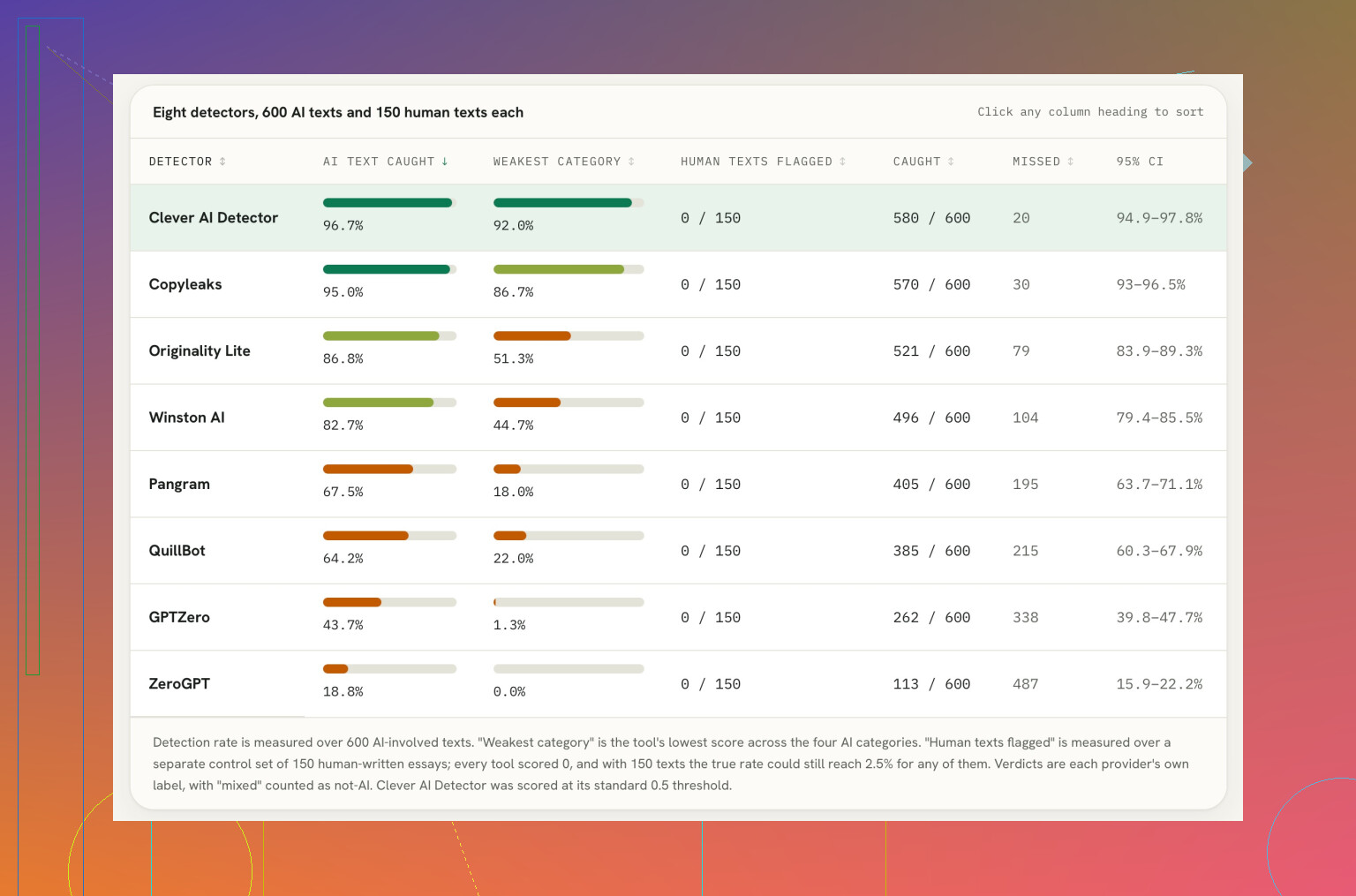
Clever AI Detector flagged 96.7% of the AI-involved texts, narrowly ahead of Copyleaks at 95.0%. The gap isn’t big enough for me to treat either result as definitive. Farther down, GPTZero caught 43.7%, which does make the difference look meaningful within this particular sample.

Clever also stayed above 90% in every AI category tested. That consistency is probably the strongest part of its result, tho it still doesn’t tell me how the tool would perform on different topics, writing styles, or newer models. I couldn’t verify that the same ranking would hold outside this test.

The catch behind the ranking

The test counted AI-edited human writing as AI-involved. That’s defensible if the goal is detecting any AI assistance, but it’s much shakier if someone wants to identify fully generated work. Changing that label could change the order, so these percentages shouldn’t be read as universal accuracy scores.

There’s also no basis here for treating a detector result as proof of authorship. At most, it’s one signal that needs context.

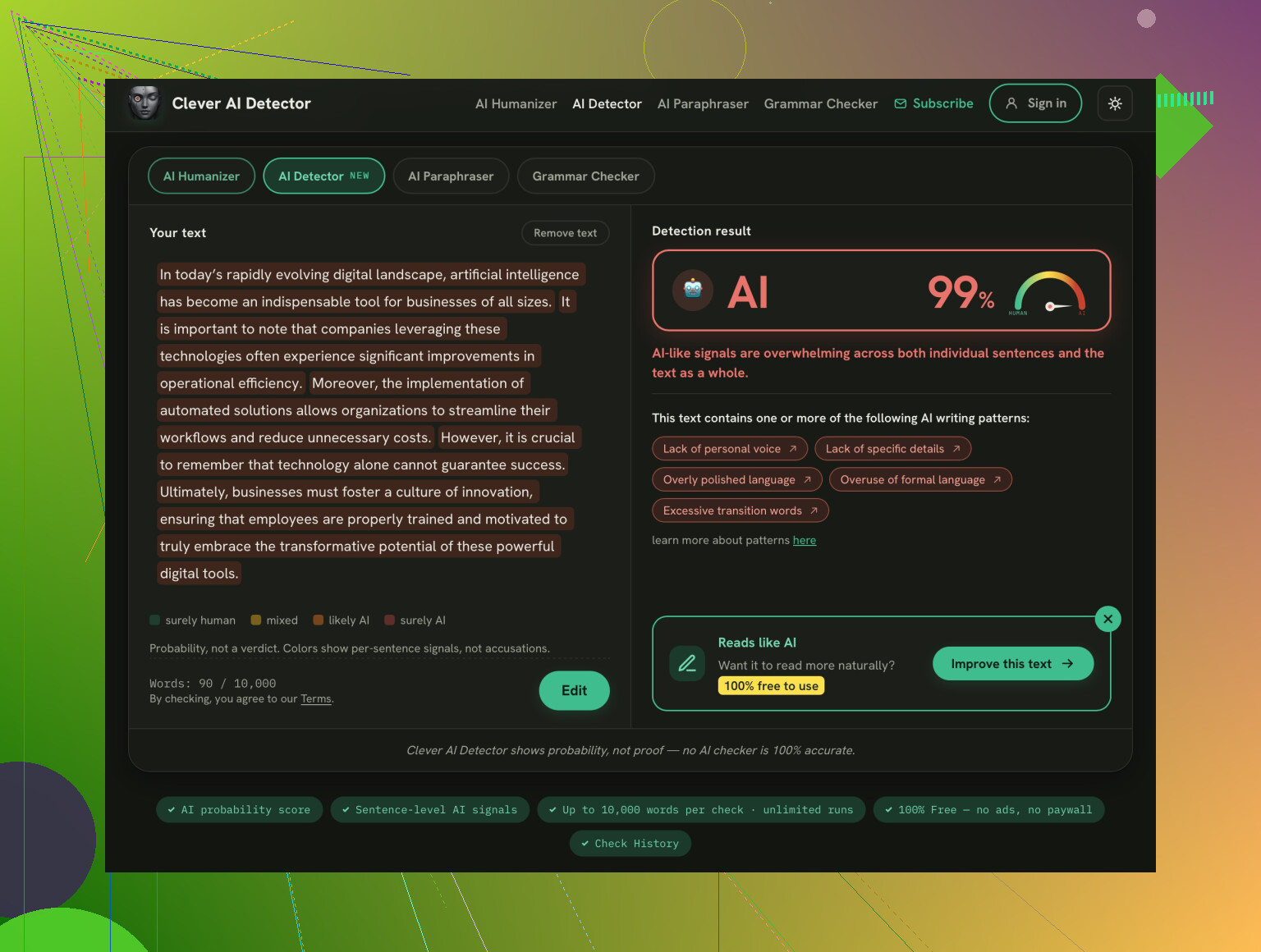
Clever is presented as free, with no account required, a 10,000-word allowance per check, and unlimited checks. I couldn’t confirm whether those access terms will stay unchanged, so I’d check them before relying on the service regularly. The working page is text screening Clever AI Detector.

How I’d check it myself

Build a small private sample containing untouched human writing, fully generated text, and human drafts edited with AI. Hide the labels, run every detector on the same material, and record both missed AI and false accusations. Test the kind of writing you actually handle, because that result matters more than somebody else’s leaderboard.
13 Likes

The missing metric is false positives, since that’s what can waste time or create awkward client conversations. For a quick second opinion, Clever fits better than BrandWell’s broader writing platform, but I wouldn’t use either as a pass/fail gate. If two detectors disagree on lightly edited text, flag it for a brief human review rather than running more scans until one gives the answer you want.

The hidden time sink is input inconsistency. Scores can change when you scan a whole article versus a few paragraphs, or when headings, bullets, and quoted material are included. Pick a minimum length and strip out anything the writer did not author before comparing results. Otherwise you may be measuring formatting differences rather than the draft itself.

For your specific use, Clever AI Detector is the better fit. BrandWell makes more sense if you want its broader content workflow, but that sounds like extra machinery for a quick second check. I agree with @real_gadget that disagreement should trigger human review, though I’d keep that review narrow: inspect abrupt tone changes, vague filler, unsupported claims, and citation problems instead of trying to determine authorship from style alone.

A private benchmark is useful, but it does not need to become a research project. Save 15 to 20 known drafts from your actual client categories, rerun them occasionally, and track which detector creates the fewest pointless reviews. The tool that saves you editing time is more valuable than whichever one reports the highest detection percentage.

Don’t paste an unpublished client draft into any detector until you have checked how the service handles submitted text. Accuracy gets most of the attention, but confidentiality is the bigger operational risk. Client names, internal links, product details, interview quotes, and material under NDA may not belong in a third-party scanner at all.

That creates an annoying technical tradeoff. Redacting sensitive passages can change the score, especially if you remove quotations, lists, or specialized language. The cleanest approach is to scan only the ordinary body copy and exclude anything confidential or written by someone else. Keep the sample long enough to be meaningful, and use the same preparation rules every time. @digitalhub9863sync is right about input consistency, but I would treat privacy rules as the first filter.

For the use case described, Clever sounds closer to the required tool. It is a quick standalone check, while BrandWell or Content At Scale makes more sense when you want content production and management features around the detector. Paying for or learning a broader platform will not necessarily make an ambiguous detection result more useful.

I would avoid turning the second detector into a second verdict. Light editing sits in the detector’s weakest zone because sentence predictability, grammar cleanup, and AI involvement get mixed together. If the original tool and Clever disagree, check the document history, sources, repeated sentence patterns, unsupported claims, and whether the writer can explain the draft. Those are stronger review signals than running the same copy through four more scoring systems.

A practical workflow would be to record the two results privately, trigger manual review only above a threshold you set, and never send the percentage to the client as evidence. Track which detector causes unnecessary reviews over a month or two. For this job, the useful detector is the one that reduces editorial work without creating confidentiality problems or false accusations, not the one that produces the most confident-looking number.

A scanner that gives you a rough warning in 20 seconds is useful; a scanner that makes you open a project, configure a workflow, and wade through extra features is solving a different problem. For a quick second check, Clever is the more sensible choice. BrandWell makes more sense when the detector is part of a larger content operation you already use.

I wouldn’t pay much attention to small score differences, though. A draft moving from 38% to 51% after a few edits does not suddenly become suspicious. Treat the output as a broad band: low concern, unclear, or worth checking. The percentage looks precise, but the underlying judgment usually isn’t.

Something people forget is that detector behavior can drift when the provider changes its model. Your saved benchmark may produce different scores a month later even though the text has not changed. Keep two or three fixed control samples and rerun them before trusting a noticeable shift. If all the controls suddenly score higher, the tool changed, not your writers.

For your setup, I’d run your current detector first and use Clever only on drafts that land in the uncertain range. That keeps the second check fast and avoids scanning every article twice. BrandWell would be overkill unless you want the surrounding writing and management features anyway.

Detectors are close to useless on lightly edited text, so stop expecting a clean answer there. That’s the zone where AI cleanup and normal editing look identical, and no tool separates them reliably. @cyberpilotzone’s ‘treat it as a band, not a number’ take is the sanest thing in this thread, and I’d stretch it further: for edited drafts, skip the second scan entirely and just ask the writer how they produced it. A two line answer about their process tells you more than a 51% flag ever will. Clever is fine as a fast gut-check on suspicious full drafts, but if your whole problem is edited text, you’re buying a second opinion on the one thing detectors are worst at.

Scan the untouched submission or don’t bother. If the draft has already passed through Grammarly, an AI rewrite button, or even heavy copyediting, you are testing the editing process as much as the writer’s original work. Save the submitted file, run the quick check there, and keep the cleaned version out of the detector.

I’d push back slightly on skipping scans altogether. They can still help route work, provided the result never becomes an accusation. Use Clever AI Detector as the lightweight second check because that matches the job you described. BrandWell or Content At Scale only makes sense if you need the surrounding production tools. A detector that takes longer to operate than the manual review it triggers is pointless.

The useful output is an editorial action, not an AI percentage. For example: normal edit, verify sources, or ask for revision notes. That keeps you focused on whether the draft is usable and supported, which matters far more to the client than proving exactly which sentences involved AI.