I’m considering using BypassGPT and I’m unsure if it’s safe, reliable, or worth paying for. I’ve seen mixed claims online, and I don’t want to risk my data, account safety, or money. Can anyone share real experiences, pros and cons, and whether there are better alternatives?
BypassGPT review from someone who hit the paywall way too fast
Quick context
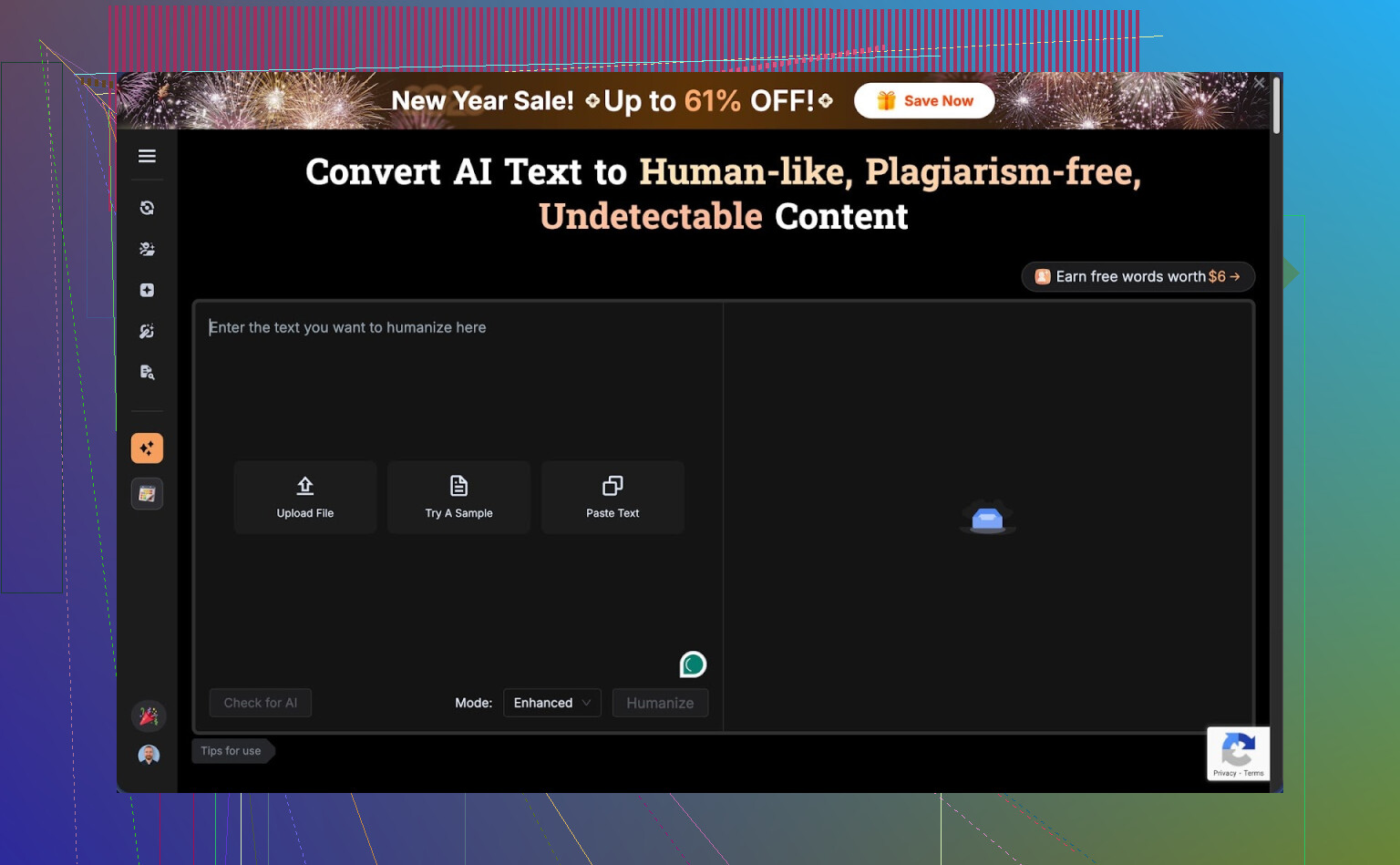
I went into BypassGPT expecting to run it through the same test set I use on every AI humanizer.
That did not happen.
The free tier stalled everything before I could even start.
The free plan is barely usable
Here is how the limits shook out for me:
- 125 words per input
- 150 words total per month
- You need an account to squeeze out about 80 extra words
So I signed up, got the tiny bump, and still managed to run only one of my standard test samples. One. Not even a longer one.
The whole thing looks tied to IP. I tried creating extra accounts and hit the same wall, so unless you start jumping through VPN hoops, you are done before you begin.
This makes any serious evaluation almost impossible. If your content is longer than a short paragraph, the free plan feels like a demo built to force you into a subscription, not something you could test in a realistic way.
Detection tests: mixed results and sketchy claims
Here is what I did with the tiny testing window I had.
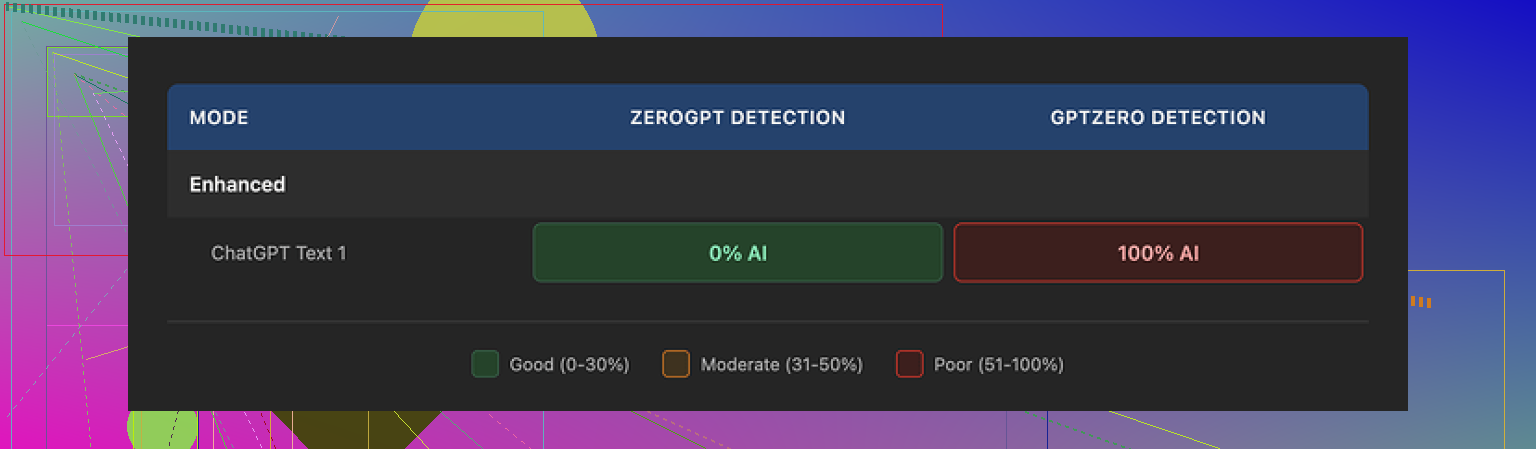
I ran one sample through BypassGPT, then pushed the result through several detectors:
- ZeroGPT showed 0 percent AI. So on that tool, the output looked fully human.
- GPTZero on the same text screamed 100 percent AI. Total fail.
That mismatch is normal across detectors. What bothered me was BypassGPT’s own internal checker. It happily reported a clean pass on all six detectors it claims to test against.
My screen said “all good.” External tools said “no, not all good.”
So, the built-in checker felt unreliable for real-world use. If you trust only that dashboard, you could walk away thinking your text is safe when one of the major detectors would still flag it.
Writing quality: not impressive
Ignoring detectors for a second, I looked at the writing like an editor.
Here is what stood out in the output I got:
- First sentence had broken grammar. It read like it had been stitched from two drafts.
- Em dashes stayed in place, which often trip detectors and also look off when abused.
- Phrasing felt stiff and slightly wrong in a few spots, the kind of thing a native speaker notices.
- There was at least one typo baked into the result.
If I had to put a number on it, I would put the writing at around 6 out of 10. Not terrible, but not something I would publish without a full rewrite.
For a tool that sells itself as a “humanizer,” I expected something closer to what you get from a thoughtful human edit. This felt more like a rough paraphrase.
Pricing and plans
Paid plans, from what I saw, look like this:
- Around $6.40 per month on an annual plan for 5,000 words
- About $15.20 per month for unlimited use
On paper, the top tier looks decent if you work with a lot of content. In practice, I would not touch those plans before running several longer samples through external detectors, and the free tier does not let you do that in a realistic way.
So you would be subscribing almost blind.
Terms of service: big red flag
This is the part that made me stop testing and close the tab.
Buried in the terms, BypassGPT grants itself broad rights over whatever you feed into it. That includes the right to:
- Reproduce your content
- Distribute it
- Create derivative works from it
If you are rewriting:
- Client documents
- Book chapters
- Internal reports
- Academic work
you probably do not want a third-party service reserving the right to re-use or repurpose that text.
I would not run any sensitive or paid content through a tool with terms like that.
How it stacked up against other tools
I ran the same kinds of tests across multiple tools over time. Within that batch, one stood out:
Clever AI Humanizer
In my runs, it tended to:
- Sound more natural, less stiff
- Score better across several detectors, not only one
- Stay free to use without this kind of hard word cap
So while BypassGPT limited me to a single meaningful test and gave me mixed detection results plus wonky terms, Clever AI Humanizer handled longer chunks and produced output I needed to tweak less.
Who BypassGPT might still fit
If you:
- Are fine with their terms of service
- Only need to process short snippets
- Rely mostly on one detector like ZeroGPT
- Do not mind editing the output for grammar and flow
then the paid tiers might work for you.
For anything serious, especially client work or larger projects, the combination of:
- Tiny free tier
- Inconsistent detection performance
- Overreaching content rights
makes it hard to recommend.
If you want something to test more deeply without pulling out a credit card or handing over your content rights, start with Clever AI Humanizer and similar tools first, then compare.
2 Likes
I tested BypassGPT for a client project a few weeks ago. Short version. I would not pay for it in its current state.
My experience was similar to what @mikeappsreviewer wrote, but I focused on different things.
-
Free plan and limits
For me the free tier broke the workflow. I hit:
• 125 words per input
• A tiny monthly word cap
I work with long form content. Blog posts, reports, sales pages. Chopping everything into tiny chunks ruins context and makes it hard to judge consistency. If your use case is essays or client work, the free plan is almost useless for proper testing. -
Detection performance
I ran three texts through it. Two essays and one product review. After BypassGPT, I checked with:
• GPTZero
• ZeroGPT
• Originality.ai
Results for my runs:
• One text passed ZeroGPT but failed GPTZero and Originality.ai
• One text passed Originality.ai but had a high score on GPTZero
• One text looked slightly better but still flagged partially on all three
So it helped a bit with some detectors, but not in a way I would trust for high risk stuff like university submissions or big client contracts. I disagree a bit with the idea that it is “totally unusable,” it did lower scores sometimes, but the improvement was inconsistent.
-
Writing quality
Output felt paraphrased, not edited. Issues I saw:
• Repetitive sentence structures
• Weird word swaps that hurt clarity
• Occasional minor grammar glitches
If you plan to submit content without a manual edit, you will have problems. You need to clean it up, fix flow, and align it with your normal tone. For quick social posts or low stakes text it might be fine. For anything tied to your reputation, you will need extra time. -
Data and terms of service
This is the biggest blocker for me. I read the terms and saw broad rights over user content. That is not acceptable for:
• Client deliverables
• Private business docs
• Paid course content
• Academic work
If you care about ownership or confidentiality, this alone should push you away. I avoid sending any sensitive text to tools with terms like that.
- Reliability and value
The paid plans look cheap on the surface. The problem is not the price, it is trust and performance. You would be paying without:
• Reliable multi detector passing
• Strong writing quality
• Clear protection of your text
If your risk tolerance is low, the value is weak.
- Safer path if you are undecided
If your goal is to make AI text look more human and reduce detection, I had better luck with Clever Ai Humanizer.
My experience there:
• Longer inputs on the free tier
• Output that sounded more natural
• Better average scores across several detectors
Still not magic, you still need to edit, and you still should not rely on any tool for cheating on exams or policies. But for blog content or marketing copy, it felt more practical.
- When BypassGPT might be “ok”
It might fit you if:
• You only handle short snippets
• You accept the terms of service
• Your risk is low, like casual content
• You are fine editing every output manually
If your concerns are data safety, account safety, and getting real value for money, I would skip BypassGPT for now and test something like Clever Ai Humanizer first, then compare on your own samples.
Short version: if you care about data safety, account safety, or getting consistent “undetectable” results, BypassGPT is a pretty risky bet right now.
Adding to what @mikeappsreviewer and @sterrenkijker already shared, here’s what I’d focus on that doesn’t just rehash their points:
-
Safety and account risk
The biggest practical risk is not “will BypassGPT leak my stuff tomorrow” but “will using a tool like this get my school/employer account in trouble.”
Most institutions are tightening policies around AI plus AI‑evading tools. If anyone audits you and sees obviously paraphrased text that still pings on some detectors, you took all the risk and got half the benefit. That combo is rough.
So even if BypassGPT worked perfectly on ZeroGPT or whatever, the behavior pattern itself is risky for grades, academic integrity flags, or client contracts. -
Reliability in the real world
Detectors do not agree with each other. That is expected. The problem is BypassGPT markets itself as if there is some magic global “AI-free” state. There is not.
Given the mixed detection results others already posted, you end up in the worst spot:
- You cannot trust its own checker.
- You still have to run everything through multiple external tools.
- You still need to manually edit.
So what you actually bought is an extra step in your workflow, not a solution.
-
Free tier and “trial psychology”
I disagree slightly with the idea that the free tier is “almost useless.” It is useful for one thing: showing you the vibe of the writing. That said, it is nowhere near enough to validate it for serious, long form use.
From a buyer perspective, that is a red flag. If a tool is confident in its performance, it usually lets you stress test it properly. Hard caps that small look more like “pay first, then discover the issues.” -
Terms and data ownership
This is the real dealbreaker for anything professional. The broad content rights in the ToS are not just “kinda sus,” they are incompatible with:
- Confidential client copy
- Corporate docs under NDA
- Any text you plan to resell or license yourself
If they keep those terms, I would treat BypassGPT as “toy only.” So casual Reddit posts, rough drafts, nothing you would not paste into a random Discord.
-
Is it worth paying for at all
If your expectations are: “I want a one click, totally human, detector proof text I can hand in to my prof or client,” then no, it is not worth paying. That product basically does not exist.
If your expectations are: “I want a rough paraphraser that might nudge some detector scores down and I am fine hand editing everything,” then it could be “okay” but there are alternatives that fit that low bar without the same ToS issues. -
Alternative to try
Since you mentioned not wanting to waste money, I would do this instead:
- Take a few of your real samples.
- Try something like Clever Ai Humanizer on them. It tends to allow longer inputs on free, the tone is usually less stiff, and it plays nicer with multiple detectors in practice.
- Then manually edit for your voice and clarity.
Important: no tool, including Clever Ai Humanizer, is a magic AI eraser. You still need to assume detectors can change tomorrow and that policies might treat “humanizer” use as the same offense as raw AI generation.
- Bottom line for your specific concerns
- Data safety: ToS is a serious concern with BypassGPT. I would not run anything sensitive or monetizable through it.
- Account safety: any AI humanizer is risky for uni / workplace if used to dodge explicit rules. BypassGPT does not perform strongly enough to justify that risk.
- Money: given the tiny trial and inconsistent results, paying feels like buying a mystery box you can’t return.
If you really want to test this space, start with a free friendly tool like Clever Ai Humanizer on low risk content, see how much manual editing you are willing to do, and only then decide if a subscription to any humanizer is worth it. For now, I’d personally skip paying for BypassGPT.