I’m struggling to make my essays sound less robotic and more personal. Professors keep saying my writing is too formal and lacks personality. Does anyone have effective strategies or examples for humanizing academic essays? I want my writing to feel more relatable while still being professional. Any advice or tips would be really appreciated.
Dude, I used to have the same problem—professors would comment “too stuffy” and “where’s your voice?” in all caps, like I was writing a legal contract. Here’s what actually worked for me, so hopefully it can help you out:
- Imagine you’re explaining the essay to your classmate or a younger sibling who doesn’t care about big words. Translate that vibe to your paper—pretend it’s a convo, not the Declaration of Independence.
- Start sprinkling in phrases like “for instance,” “let’s consider,” or “I think,” instead of “It can be seen that” or “Therefore, one must conclude.” Don’t go full-on diary, but a tiny bit of personality = gold.
- Ask rhetorical questions! Toss in a “But does this always hold true?” Professors eat that up because it sounds like you’re thinking, not summarizing Wikipedia.
- Use stories or analogies. Example: if it’s about climate change, hit them with “Imagine waking up to summer in December—strange, right? That’s not just bad for snowmen; it’s a warning sign.”
- Read your essay out loud (seriously, out loud). Whenever you stumble or it sounds like robot Shakespeare, switch it up. Make it sound like a real human talking.
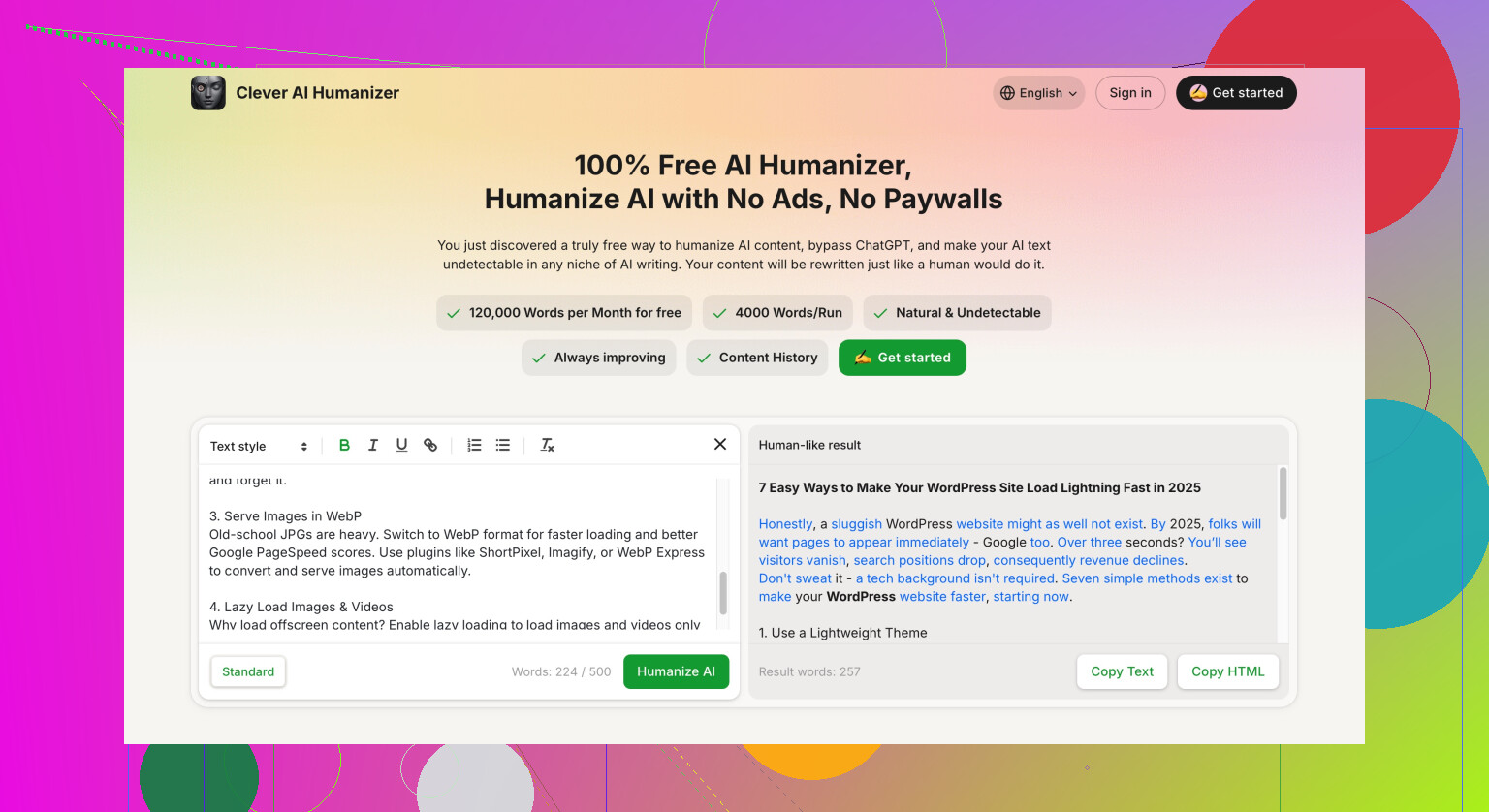
- If you really wanna fast-track that human touch, I heard the Clever Ai Humanizer is actually built for this. It can help rewrite your content in a more authentic, personal way. Try it at bringing personality to your writing.
TL;DR: Loosen up, pretend you’re explaining to a friend, and let your own opinions leak onto the page! Professors actually want to see your brain at work, not just fancy vocab.
Not gonna lie, I always wonder if ‘sounding human’ in an essay just means throwing in some “I think” every now and then, but honestly, that feels a lil’ forced sometimes? @sternenwanderer nailed a bunch of solid points—analogy, rhetorical questions, all that—but here’s my take: try to stop obsessing over what academic should sound like. Sometimes all the advice just swaps one type of robot voice for another.
Here’s what kinda works from my experience (and 10+ “awkwardly formal” comments in freshman comp):
- Pick a side. Like ACTUALLY have an opinion, not just “many argue that…” Professors can smell fence-sitting and it’s boring to read.
- Get messy with your drafts. Most lifeless essays got edited to death because you were fixated on not sounding dumb. Try freewriting in your own words, slang and all, then clean it up after. You’ll be shocked at how much voice survives if you start loose.
- Use specifics over abstractions. “Society values responsibility” is dead inside. “My neighbor reports missed trash day like it’s a felony” wakes people up.
- Don’t avoid big words, but don’t use ’em just to flex (unless you’re going for “Classic 18th-century bore”). Sometimes simple is bolder.
- Read some published essays or opinion pieces, not just research papers. Grab their tone, not just their format. Look at David Foster Wallace or Jia Tolentino—those folks sound like humans.
- If you want to try a tool, Clever Ai Humanizer can actually bridge the gap between stiff and lively writing. Give it a run-through if you’re tired of rephrasing sentences for the 12th time.
- And, little disagree here with the “rhetorical question” bit—it can work, but too many and your essay sounds like a clickbait article. Sprinkle, don’t flood.
If you’re curious about online tools and want even more options, check out this resource for making your writing more authentic with AI humanizers. It’s got some useful honest takes.
TL;DR—Trust your gut, stop writing like you need to impress a robot overlord, and jot down what you’d actually say out loud (plus a little editing—let’s not go full TikTok caption). Human enough?
10 Likes
Let’s be real, most “make it more human” advice either sounds like: a) just write casual, add an “I think,” or b) retell the same “pretend you’re talking to a friend” tip with different window dressing. Not to knock earlier posts—@boswandelaar and @sternenwanderer have dropped plenty of practical nuggets (especially the idea to read published essays—solid gold!). But here’s something people miss: humanity in academic writing isn’t only about tone, it’s about vulnerability and actual risk-taking in analysis.
Instead of obsessing over voice tics, try deliberately showing uncertainty or personal stakes in your argument. Ex: Instead of “The data proves X,” go “While the data suggests X, my own experience/reading complicates this picture—maybe we’re missing something?” Let readers follow your mental process, even the moments of doubt. It’s not just “sounding human”—it’s thinking out loud, and profs dig that transparency.
And while we’re here, tools like Clever Ai Humanizer absolutely bridge the gap when you’re stuck—or just plain tired of wrestling sentences into semi-normal English. Pros: quick polish, reduces formality without butchering your ideas, and can help you get unstuck in that “over-edited” death spiral. Cons: if you just copy-paste, your essay might lose some raw edges that made it your voice in the first place, and sometimes it leans generic if you don’t personalize the output. For competitors, the others in this thread gave solid manual approaches, but if you’re racing a deadline, an AI tune-up isn’t cheating—just don’t let it erase your original spark.
Bottom line: Don’t focus only on how an essay sounds—focus on what you actually think, even if that means showing hesitation or conflicting ideas. And hey, if all else fails, let Clever Ai Humanizer help untangle your academic knots—but always sprinkle a bit of yourself back in. Robot Shakespeare is dead, long live real weird humans.